
The Best Padel Ball Machines in 2026: Honest Comparison From a Company That Makes One
Seven machines compared on price, capacity, speed, ball height, battery life, and control. We make two of them, and we tell you exactly where each machine wins and loses, ours included.
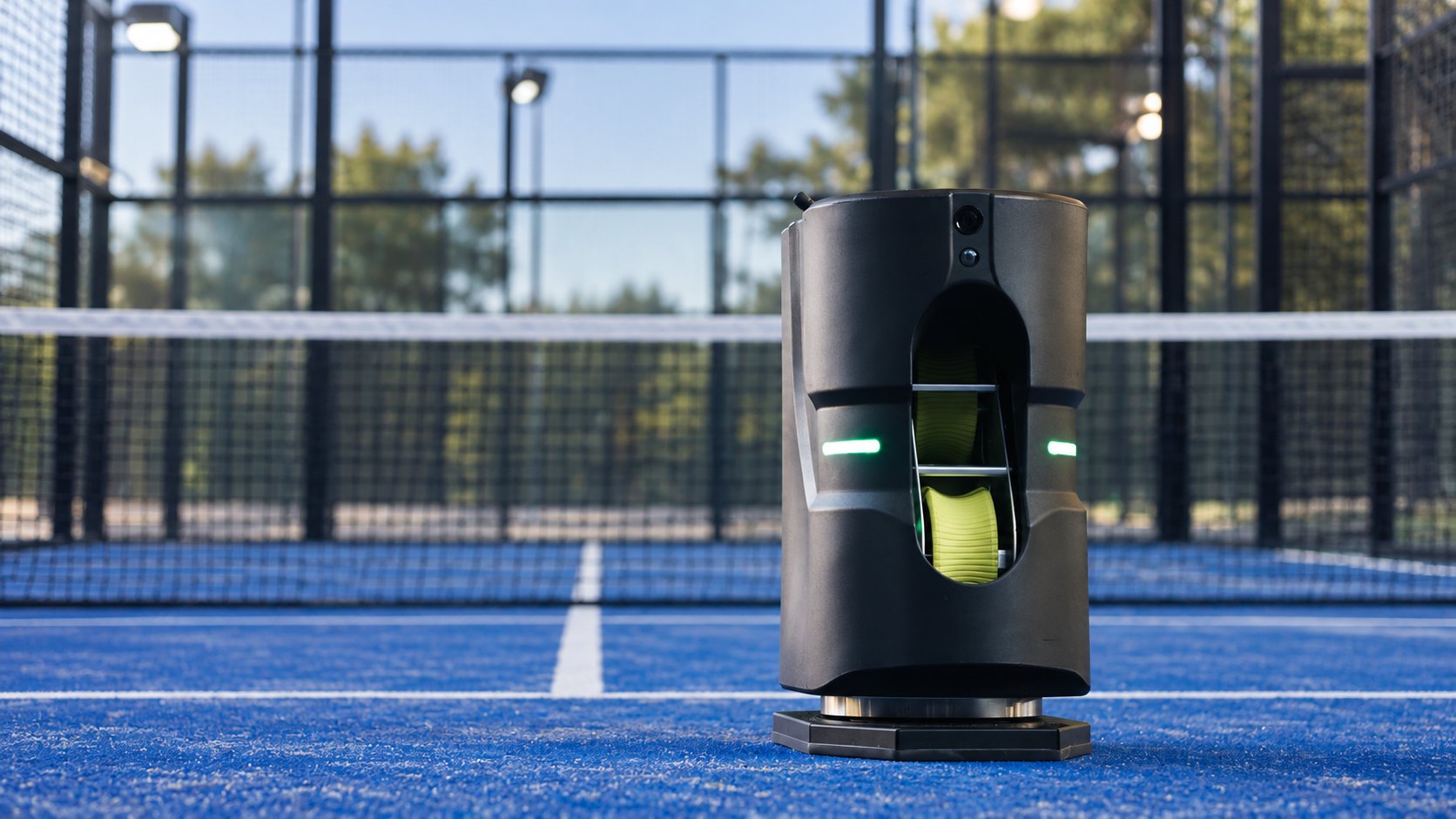
Padel is the fastest-growing racket sport in the world and the slowest-moving corner of the ball machine market. Most of what gets sold as a "padel machine" is a tennis machine with the speed turned down. After comparing the machines actually built or tuned for padel on price, ball capacity, speed, ball height, battery life, and control, our picks are the Tennibot Partner V2 ($2,275) for the most game-like solo training, the PadelShooter MAX ($2,495) for the high lobs padel is built around, and our own Partner Lite ($1,525) as the best value, $96 above the Lobster Padel for cameras, an app and a third year of warranty. Real padel machines run about $869 to €4,900, and of the seven here, only one moves itself around the court between feeds.
Full disclosure: two of these seven machines are ours, and they hold two of the awards. Tennibot builds the Partner V2 and the Partner Lite. That is exactly the setup that should make you suspicious of a list like this, so here is the test we applied: an award goes to us only where the published numbers say so, and those numbers are in the table below for you to check. We included every serious padel machine we could find on sale, verified every spec and price against the manufacturer's own current product pages in September 2026, and we tell you where each machine, ours included, loses. If you want the highest lobs and the widest court coverage from a fixed spot, we point you to PadelShooter. If you want the biggest hopper for the least money, we point you to Lobster. If you want the simplest machine with the longest warranty, we point you to Sports Tutor. If you want the cheapest way in, that is Sports Tutor's $869 Mini, not us.
Top Picks at a Glance
- Best overall (game-like training) → Tennibot Partner V2 ($2,275), the only machine here that repositions itself on court while feeding drills
- Best for high lobs → PadelShooter MAX ($2,495), the only machine here that reaches the roof of an indoor padel center
- Best value → Tennibot Partner Lite ($1,525), AI cameras, app drills and a 3-year warranty for $96 over the cheapest full-size machine
- Biggest hopper under $1,500 → Lobster Padel ($1,429), 150 balls and a 10–80 mph range, when it's in stock
- Best app control under $1,500 → PadelShooter Smart ($1,445), the full PadelShooter app on the budget chassis
- Simplest workhorse → Padel Tutor ($1,545), 35 lbs, made in the USA, 3-year warranty
- Best budget → Padel Tutor Mini ($869), 24 lbs, with real limits
- European club premium → Viborace (€4,900), 180 balls and a 7–10 hour battery, at triple the price
Comparison Table: Every Machine We Evaluated
| Machine | Price (Sep 2026) | Capacity | Top speed | Battery | Weight | Control | Moves on court | Warranty |
|---|---|---|---|---|---|---|---|---|
| Tennibot Partner V2 | $2,275 | 140 balls | 70 mph | 4–5 hrs | 35.4 lbs | App + Apple Watch | Yes, autonomous | 3 years |
| Tennibot Partner Lite | $1,525* | 140 balls | 70 mph | 4–5 hrs | 25 lbs | App + Apple Watch | No | 3 years |
| PadelShooter MAX | $2,495–$2,560 | 145 | 140 km/h (tennis mode) | 6–8 hrs (external) | 53 lbs | 15-button remote + app | No | 2 years |
| Lobster Padel | $1,429 (sold out) | 150 | 80 mph | 4–6 hrs | 42 lbs | 2-function remote | No | 2 years |
| PadelShooter Smart | $1,445 | 100 | 120 km/h | 4–5 hrs | 44 lbs | Remote + app | No | 2 years |
| Padel Tutor | $1,545 | 110 | 120 km/h | 3–4 hrs | 35 lbs | Knobs (remote extra) | No | 3 years |
| Viborace | €4,900 | 180 | 140 km/h | 7–10 hrs | 58 lbs | App on included phone | No | 1 yr (1.5 yr motor) |
*Check the product page for today’s price. PadelShooter and Viborace quote speeds in km/h (120 km/h is about 75 mph, 140 km/h about 87 mph); PadelShooter's 140 km/h figure is its tennis mode, and padel mode is speed-limited. Prices verified against manufacturer pages September 2026 and updated quarterly.
1. Tennibot Partner V2: Best Overall for Game-Like Training
Our pick, and our product
$2,275 · tennibot.com · 60-day money-back, 3-year warranty, made in USA
The Partner V2 is the machine we build, so here is the case for it in plain numbers, followed by the honest case against it.
Of the machines in this guide, the Partner V2 is the only one that repositions itself on the court between feeds. Every other padel machine here fires from wherever you park it. That matters more in padel than in tennis: the court is 20m by 10m with glass at both ends, and a ball arriving from the middle of the service box is a different problem from the same ball arriving from the corner, even when speed and spin are identical. The Partner uses 4K cameras to map the court and track where you're standing, then varies position, pace (10–70 mph), and spin (up to 3,600 RPM) against you. It holds 140 balls, runs 4–5 hours on a battery that swaps out with one click in under a second, weighs 35.4 lbs, and is controlled from iOS, Android, or an Apple Watch. Human-detection sensors stop it if someone walks in front of it.
If you want the same AI, cameras, drills, and app without the movement, that is the Partner Lite, which is third on this list.
Pros
- The only machine here that moves between feeds, so shots arrive from genuinely different court positions
- AI player tracking and adaptive placement, controlled from a phone or an Apple Watch
- Strongest coverage in the category: 3-year warranty and a 60-day trial
- One-click battery swap in under a second: keep a spare charged and the session never stops for charging
Cons
- $2,275 sits well above the $1,429–$1,825 cluster, and it is overkill if you only want repetitive feeds to one spot
- Tops out at 70 mph and won't throw the roof-height lobs a PadelShooter MAX will in an indoor center
- 140-ball hopper is mid-pack: Lobster holds 150, the MAX 145, and Viborace 180
Get it if: you train alone often and want padel that feels played rather than fed, or you coach and want drills that change origin as well as target. Skip it if: your training is one shot repeated to one spot.
2. PadelShooter MAX: Best for High Lobs
Best for high lobs
$2,495–$2,560 · padelshooter.com · Sweden
PadelShooter is the only brand here that builds exclusively for padel, and the MAX is its flagship. Its advantage is reach: it fires high enough to hit the roof of an indoor padel center, which is what makes it genuinely good for practising the lob-to-bandeja sequence that decides most points. It covers 45 degrees of court, corner to corner, and it does that without the machine itself turning: the aiming happens inside, at the wheels, instead of the whole body swivelling to point at the target. The practical difference is that you cannot see where the ball is going until it comes out. On a machine that swings around to aim, you read the next shot before it is hit, and you start moving early. It holds 145 balls, weighs 24 kg (53 lbs) with the battery, runs 6–8 hours on the external battery, and comes with a 15-button remote plus an app that supports 15 languages and lets coaches export and import training programs. A padel mode limits speed; a tennis mode unlocks the full 140 km/h.
Pros
- Highest ball trajectory here: reaches indoor-center roof height for realistic lob practice
- Internal wheel oscillation across 45 degrees, so shot direction stays hidden
- 6–8 hour external battery and a 145-ball hopper suit back-to-back club sessions
- Built for padel first, not adapted from a tennis machine
Cons
- Heaviest of the portable machines at 53 lbs, and the largest folded
- Most expensive machine here short of Viborace
- No cameras and no player tracking: every drill is a preset pattern, run from a fixed spot
- Sold from Sweden, so US service and spares take longer than a domestic brand
Get it if: you train or coach indoors and lob practice is the reason you are buying. Skip it if: you'll carry it to the court yourself, or you want the machine to respond to where you are.
3. Tennibot Partner Lite: Best Value
Our pick, and our product
$1,525 · tennibot.com · 60-day money-back, 3-year warranty, made in USA
The Lite is the Partner V2 with the drive base taken off. Same 4K cameras, same court mapping and player tracking, same app and drills, same 10–70 mph and 3,600 RPM, the same 140-ball hopper, the same 4–5 hour battery that swaps out with one click in under a second. What you give up is the movement, and what you get back is 10 lbs: it weighs 25 lbs against the V2’s 35.4.
Here is the value arithmetic, and we know how it looks coming from us, so check it against the table above. The Lite is $66 more than the Lobster Padel, the cheapest full-size machine here. For that $66 you add cameras and player tracking, a programmable app, a third year of warranty, and a 60-day trial in place of Lobster’s 30-day return with a 10% restocking fee, and you drop 17 lbs. Against the PadelShooter Smart at $1,445 it holds 40 more balls. That is why it takes this award rather than the Lobster, and the places where the Lobster genuinely wins are in its own entry below.
Pros
- AI cameras, player tracking, and programmable app drills at the price of a basic launcher
- 25 lbs: the lightest full-size machine here, and 17 lbs under the Lobster
- 3-year warranty and a 60-day trial, the strongest coverage in the guide
- 140 balls and a battery that swaps in under a second, so sessions are not built around reloading or charging
Cons
- Stationary: the court movement that makes the V2 worth its price is not here
- 140 balls trails the Lobster’s 150, and 70 mph trails its 80
- Costs more than both machines it is measured against, the $1,429 Lobster and the $1,445 PadelShooter Smart
Get it if: you want AI drills and app control for close to what a knobs-and-remote launcher costs. Skip it if: you want the machine to move, which is the V2, or you want the lowest price in the guide, which is the $869 Padel Tutor Mini.
4. Lobster Padel: Biggest Hopper Under $1,500
Biggest hopper under $1,500
$1,429 · lobstersports.com · 2-year warranty · made in USA · listed sold out as of September 2026
Lobster has been building ball machines in California for decades, and the padel model brings that platform to the sport at the lowest price of any full-size machine here: 150 balls, the largest hopper under $2,000, a 10–80 mph range whose low floor makes it genuinely usable for beginners and kids, topspin and underspin, electronic elevation from 0 to 60 degrees, random horizontal oscillation, and a 4–6 hour battery in a 42-lb body. It ships with a 2-function remote rather than charging extra for one, which is a change from Lobster's tennis line. The catch at the time of writing is stock: the padel model is listed sold out on Lobster's own site.
Pros
- Cheapest full-size padel machine and the largest hopper under $2,000
- 10 mph speed floor makes it usable for beginners, juniors, and warm-ups
- Proven US-built hardware with domestic service
- Remote included rather than a paid add-on
Cons
- Listed sold out as of September 2026; availability has been intermittent
- The whole machine swings to aim, so you can see where each ball is going before it comes out, and the height does not vary
- No app, no programmable drill sequences, no player tracking
- Battery and wheels carry only 6 months of the 2-year warranty
Get it if: you want the most hardware per dollar and can wait for stock. Skip it if: you want programmed sequences, or you need a machine this month. See our full Tennibot vs Lobster padel comparison.
5. PadelShooter Smart: Best App Control Under $1,500
Best app under $1,500
$1,445 · padelshooter.com · Sweden
The Smart is the entry point into PadelShooter's lineup and runs the same app as the MAX: pre-loaded drills, custom programs, adjustable speed, spin, and trajectory, from iOS or Android. You give up reach and precision for the price. Shots land about a metre above the side walls, which is the right height for bandeja work but well short of the MAX's ceiling, and the oscillation is external, meaning the machine body swings to aim so you can see where the ball is going. Its DC drive motors are slower and less precise than the stepper motors in the Smart Pro and MAX. It holds 100 balls, weighs 20 kg (44 lbs) with the battery, and runs 4–5 hours. If you want the stepper motors and internal oscillation without paying MAX money, the Smart Pro sits between them at $1,825 with a 115-ball hopper.
Pros
- Full PadelShooter app and programmable drills at the price of a basic launcher
- Purpose-built for padel, with shot heights tuned for bandeja practice
- 4–5 hour battery and a compact 32x43x45 cm folded footprint
Cons
- External oscillation: the body turns to aim, so shot direction is visible before the ball leaves
- 100-ball hopper is the smallest full-size capacity here
- Lower trajectory than the MAX, so deep defensive lobs are harder to reproduce
- No cameras or player tracking, and Sweden-based service for US buyers
Get it if: you want programmable padel drills for under $1,500. Skip it if: you're an advanced player who will read the machine's aim within one session.
6. Padel Tutor: Simplest Workhorse
Simplest to run
$1,545 (Mini from $869) · sportstutorcompany.com · 3-year warranty · made in USA
Sports Tutor has built ball machines in California for over 30 years, and the Padel Tutor is the one for people who want knobs, not menus. It holds 110 balls, feeds at 15–120 km/h with an interval from 1.5 to 10 seconds, includes oscillation and electronic elevation that adjusts from groundstroke to lob, runs 3–4 hours, and weighs just 16 kg (35 lbs), lighter than every other full-size machine here except our own 25-lb Partner Lite. Its 3-year parts-and-labour warranty is matched here only by Tennibot. The Padel Tutor Mini is the budget entry: $869, or $969 with the oscillator, 60 balls, 15–80 km/h, manual elevation, 11 kg, and about 2 hours of battery.
Pros
- At 35 lbs, lighter than every rival full-size machine here, so it actually leaves the storeroom
- 3-year parts-and-labour warranty and US factory service
- Electronic elevation from groundstroke to lob, with oscillation included
- The Mini at $869 is the cheapest credible way into padel machine training
Cons
- 3–4 hour battery is the shortest of the full-size machines
- No app, no programmable drills, and the remote is a paid add-on
- The Mini's 60 balls and 2-hour battery mean constant reloading
- Adapted from Sports Tutor's tennis platform rather than designed around padel
Get it if: you value simplicity, weight, and warranty over features, and nobody on staff wants to learn an app. Skip it if: you want programmability of any kind.
7. Viborace: The European Club Premium
Premium club machine
€4,900 · viborace.com · 1-year warranty (1.5 years on the motor) · Spain
Viborace is a padel-native machine out of Spain, common in European clubs, and it is the most capable machine here on raw endurance: 180 balls, a 7–10 hour battery, and a 20–140 km/h range that covers everything from a beginner feed to a smash return. It ships with a phone in the box, with the Viborace app already installed, and the app builds programmes for serve, lob, volley, bandeja, back-glass and víbora work. At €4,900 it costs roughly double the MAX and more than triple the Lobster, for no cameras, no player tracking, and no movement. The warranty is also the shortest here: one year on components, eighteen months on the motor.
Pros
- Biggest hopper (180 balls) and longest battery (7–10 hours) of any machine here
- Padel-native shot library covering bandeja, víbora, and back-glass work
- Comes with the control phone in the box, so nothing depends on your own device
Cons
- €4,900 is roughly double the next-most-expensive machine here
- Shortest warranty in this guide: 1 year on components
- Heaviest machine at 26.5 kg (58 lbs), and stationary
- Primarily distributed in Europe, so US buyers face import and support friction
Get it if: you run a European club, want all-day capacity from a padel-native brand, and the budget is not the constraint. Skip it if: you're buying in the US, or you expect smart features at a premium price.
Also Worth Knowing About
PadelShooter Smart Pro ($1,825): the middle model, with the MAX's stepper motors and internal oscillation on the smaller 115-ball chassis; the best-balanced PadelShooter for a private court. Pongbot Aura ($499 crowdfunding intro, $999 MSRP): a 7 kg multi-sport machine with a padel mode, but we can't find confirmation that units have reached buyers, so treat the padel performance as unproven until independent hands-on reviews appear. Tennis machines with a padel setting: many tennis machines will feed a padel ball, but the ones without a dedicated padel mode tend to over-speed the ball for a 20m court and can't produce the high, short trajectories padel actually needs. If you're weighing a tennis machine for double duty, our guides to the best tennis ball machines and the best pickleball machines cover those markets in the same format.
How We Evaluated These Machines
We build ball machines, which means we obsess over everyone else's. For this guide we verified every specification and price against each manufacturer's current product pages in September 2026, not cached spec sheets or affiliate round-ups. That mattered here more than usual: a widely-cited third-party padel round-up lists the PadelShooter MAX at $2,275 with a 100-ball hopper, while PadelShooter's own shop lists $2,495 and 145 balls. Where our numbers disagree with a review site, we used the manufacturer. We converted km/h figures to mph rather than restating them, and we flagged which speed figures come from a tennis mode rather than a padel mode. We have not had every one of these machines on a court ourselves: our hands-on time is with our own machines and with the Lobster and Sports Tutor platforms, so for PadelShooter and Viborace we relied on published specifications and third-party reviews, and we say so rather than implying testing we didn't do. We flagged every machine's availability problems, including when they were sold out.
What Actually Matters for Padel (60-Second Buying Guide)
Ball height matters more in padel than speed does. A padel court is 20m by 10m, so nothing needs to travel far, but the shots that decide points (the lob, the bandeja, the ball that dies off the back glass) are defined by trajectory. A machine that can only push the ball a metre above the side wall will never reproduce a proper lob, which is why the PadelShooter MAX's roof-height reach is a real differentiator and why elevation control belongs on your checklist before top speed. Where the ball comes from is the other half. A fixed machine repeats the same origin every time, and you adapt to it within a session; varied origin is the thing a stationary machine structurally can't give you. Ball capacity sets your rhythm: at a 4-second feed, 150 balls is about 10 minutes of hitting, and 60 balls is four. Real battery life decides how long a session lasts, but whether the battery swaps matters more: with a swappable battery and a charged spare, a dead battery is a pause of a few seconds instead of the end of practice. Weight decides whether the machine ever leaves storage: 24 lbs is one-handed, 35 lbs is manageable, 53+ lbs wants a permanent home at the club. And control style is a philosophy question: apps unlock programmed sequences, knobs and remotes just work, and at Sports Tutor the remote is a paid extra.
Frequently Asked Questions
What is the best padel ball machine in 2026?
For overall training realism, the Tennibot Partner V2 ($2,275), the only machine in this guide that repositions itself on court while feeding drills and tracking the player with AI. For high lob practice indoors, the PadelShooter MAX ($2,495). For value, the Tennibot Partner Lite ($1,525), which adds cameras, app drills and a third warranty year for $96 over the cheapest full-size machine here. If you want that cheapest machine instead, it is the Lobster Padel ($1,429), when it is in stock. (Disclosure: Tennibot publishes this guide and makes the Partner V2 and the Partner Lite.)
How much does a padel ball machine cost?
Credible padel machines run from $869 (Padel Tutor Mini) to about $2,560 (PadelShooter MAX), with European club machines like Viborace at €4,900. The usable middle of the market sits between $1,429 and $2,275. Watch for extras: Sports Tutor charges separately for a remote, and battery upgrades add cost at several brands.
Can I use a tennis ball machine for padel?
Sometimes, but not well. Padel balls are slightly smaller and lower-pressure than tennis balls, and a 20m court needs shorter, higher trajectories than a tennis machine's defaults produce. Machines with a dedicated padel mode (PadelShooter, Tennibot, Lobster's padel model, Padel Tutor) limit speed and adjust elevation for the shorter court. A tennis machine without that mode will mostly fire balls into the back glass.
What is the best padel ball machine for a club?
For most clubs, the Tennibot Partner. A club machine is judged on throughput, coaching value, and what it costs to keep running, and the Partner is built for all three: the battery swaps out with one click in under a second, so with a spare on hand the machine runs back-to-back sessions without ever stopping to charge, coaches get programmable drills and AI player tracking that varies shot origin instead of repeating one feed, and it carries a 3-year warranty with US service on a machine that gets used daily. At $1,525 the Partner Lite also lets a club equip several courts for what one premium European machine costs. The case for the alternatives is narrower: the PadelShooter MAX if your priority is roof-height lob training in an indoor centre, and Viborace if raw all-day capacity outranks everything else and the budget allows.
Is there a padel ball machine that moves around the court?
The Tennibot Partner V2 is the only machine in this guide that does. It uses 4K cameras to map the padel court and track the player, then repositions itself between feeds so shots arrive from different origins. Every other machine reviewed here (PadelShooter, Lobster, Sports Tutor, Viborace) feeds from a fixed position. If you want the same AI and app without the movement, the stationary Tennibot Partner Lite is the lighter, cheaper option at 25 lbs.
Which padel ball machine is best for beginners?
Look for a low speed floor and simple controls. The Lobster Padel feeds from 10 mph and the Padel Tutor from 15 km/h (about 9 mph), both slow enough for a first session. The Padel Tutor Mini at $869 is the cheapest way to find out whether machine training suits you before committing to a full-size machine.
Sources
- Manufacturer product and shop pages, fetched September 2026: tennibot.com, padelshooter.com, lobstersports.com, sportstutorcompany.com, viborace.com
- PadelShooter model comparison page (Smart / Smart Pro / MAX specifications, oscillation type, battery, ball heights)
- Sports Tutor Padel Tutor and Padel Tutor Mini specification tables and warranty terms
- Viborace padel ball machine product page (capacity, speed range, battery, box contents, warranty)
- BallMachineReviews: 2026 padel guide, used for cross-reference only where it disagreed with manufacturer data
Last updated September 15, 2026. We re-verify prices and availability quarterly and note substantive changes here.