
How to Pick Up Tennis Balls Faster: Tubes, Hoppers and Robots
Six ways to get the balls off the court, from a $20 tube to a machine that collects while you keep hitting. Real prices, real capacities, and an honest answer about which one most players actually need.
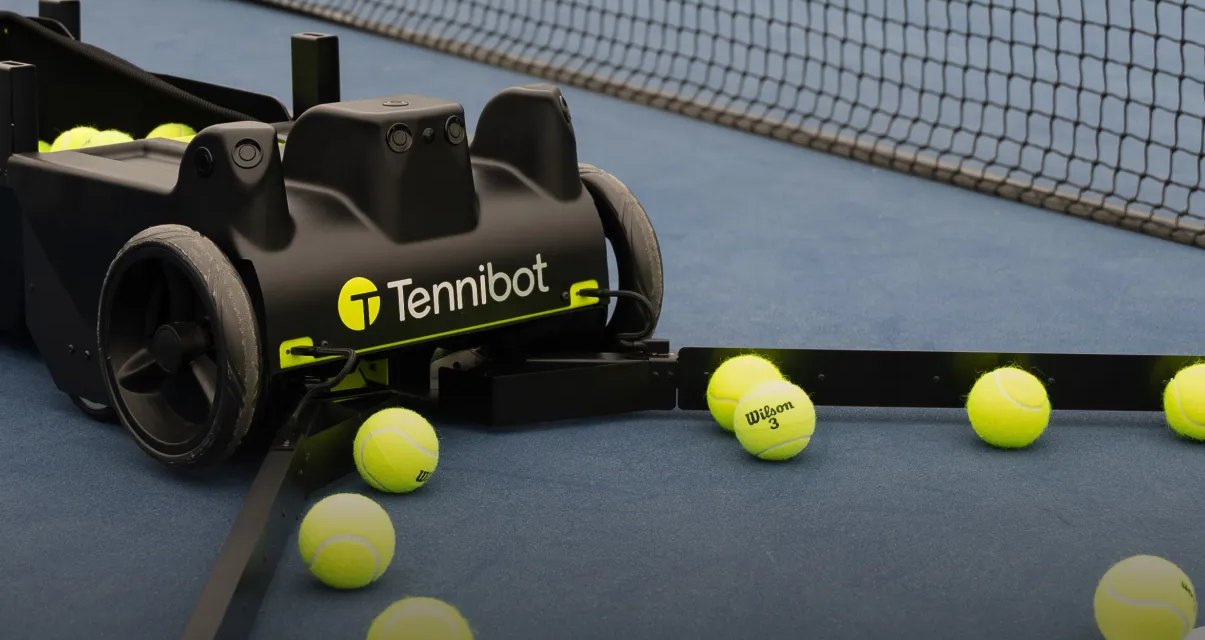
Nobody buys a ball machine imagining the part where they crawl around the court afterwards. But that part arrives every session, and it is the single biggest reason machines end up in garages.
This guide covers every way to get balls off a court, in order of price, with what each one holds and what it costs as of September 2026. Some of it we make. Most of it we do not, and for a lot of players the right answer is the cheapest thing on this page.
The Arithmetic Nobody Mentions
A full hopper on a Tennibot Partner holds 140 balls. Fed at one ball every four seconds, that is about nine and a half minutes of hitting.
Then you stop. Those same 140 balls are now spread across a tennis court, and every one of them has to get back into the machine. By hand, that is 140 bends. With a tube, it is 140 pushes and seven trips to empty. Whatever tool you use, the pickup is rarely much shorter than the hitting was.
That ratio is the whole problem. Everything below is a way to change it.
The Six Ways, Cheapest First
1. By hand — free
One ball per bend, or two if you can palm them. Fine for the twenty balls in your bag. Miserable for a hopper. The only real cost is your back, which is exactly why the rest of this list exists.
2. Pick-up tube — about $20 to $43
A plastic tube you press down over a ball; the ball pops up inside and stays there. The Tourna Perfect Pickup and Tenn-Tube hold 20 to 21 balls each and hook onto a fence or a cart.
No bending, packs into a racquet bag, and it is the cheapest thing that genuinely fixes the problem. The limit is capacity: 140 balls means emptying it seven times.
3. Hopper or basket — about $39 to $60
The wire or plastic basket you press onto a group of balls so they snap up through the base. The Tourna Ballport holds 80 balls at $38.95, the Classic Ballport 120 balls at $59.95, and the Gamma Hi-Rise 75 balls at $49.99. Most have legs so the basket doubles as the feed stand next to your machine.
For most players buying their first thing, this is the answer. One pass down the court, no bending, holds most of a session, and it costs less than a case of balls. The wheeled Deluxe versions roll instead of being carried, which matters more than it sounds when the basket is full.
4. Teaching cart — about $250
A larger wheeled cart for coaches feeding all day. The Gamma EZ Travel Cart Pro holds 250 balls at $249.99 and folds for the car. This is a capacity purchase, not a speed one: you still pick balls up the same way, you just do it far less often.
5. Rolling collector — about $100
A drum you push across the court; balls feed through wire openers as it rolls, and it dispenses them back into your hopper. The Kollectaball K-Court is $99.95 and holds 50 tennis balls or 30 pickleballs.
Genuinely faster than a basket over a full court, because you walk instead of stopping at each ball. It is bulkier to transport, and at 50 balls you will still empty it a few times.
6. Ball mower — about $795
A push-along collector built for clubs, wide enough to sweep a court in a few passes and gentle enough for clay. The Playmate Ball Mower 2.0 runs $795. If you are a facility clearing courts between lessons, the time saved pays for it. For one player with one hopper, it is more machine than the problem needs.
7. Autonomous collector — $2,275
Everything above shares one trait: you are the one doing it, and you are not hitting while you do. An autonomous collector removes that. The Tennibot Rover uses AI vision to find balls and gather them on its own, holding 90 tennis balls per run, while you stay on the other side of the net and keep training.
It is by far the most expensive option here, and it is honest to say so. What you are buying is not a faster pickup; instead, it’s a smooth practice session without stopping.
It also rarely makes sense on its own. The Rover exists to feed a machine that is emptying hoppers all session, which is why it is usually bought alongside one: the Partner and Rover bundles start at $3,245, against $3,800 for the same two pieces separately.
Everything Compared
| Method | Holds | Price | You stop hitting? |
|---|---|---|---|
| By hand | 2 | Free | Yes |
| Pick-up tube | 20–21 | $20–$43 | Yes |
| Hopper / basket | 75–120 | $39–$60 | Yes |
| Rolling collector | 50 | $99.95 | Yes |
| Teaching cart | 250 | $249.99 | Yes |
| Ball mower | Large | $795 | Yes |
| Autonomous collector | 90 per run | $2,275 | No |
Prices checked September 2026 at Tennis Warehouse, Tourna, Gamma, Kollectaball, Playmate and Tennibot. Ball capacities are the manufacturers’ stated figures for tennis balls.
Which One You Actually Need
- You hit with a bag of 20 balls → a tube. Twenty dollars, lives in your bag, done.
- You own a ball machine → a hopper, 80 balls or more, is the baseline. It is the standard answer for a reason, and it doubles as the stand you feed from. It is also the point where a collector starts to earn its price: a machine empties 140 balls in under ten minutes, so if you are running two or three hoppers a session, you are spending as long picking up as hitting. That is what pairing the machine with a Rover removes, and the Partner and Rover bundles start at $3,245 for the two together.
- You coach and feed all day → a teaching cart for capacity, or a mower if you are clearing full courts between groups.
- You want the fastest manual option → a rolling collector. You walk the court once instead of stopping at every ball.
- You practice alone, often, and the stopping is what you hate → an autonomous collector. This is the only category where you keep hitting through the pickup, and it is priced accordingly.
If you are somewhere in the middle and unsure, buy the hopper. It solves the problem for the overwhelming majority of players, and you will still use it even if you later add something bigger.
Pickleball and Padel
Pickleballs are lighter and hollow, so tennis pickups do not all cross over. Wire baskets built for tennis balls can let pickleballs slip back through, which is why the pickleball versions use tighter spacing. The Kollectaball K-Court holds 30 pickleballs against 50 tennis balls in the same drum, and most pickleball-specific retrievers are tubes or suction-style grabbers in the $20 to $40 range.
Padel sits closer to tennis: same ball, so tennis hoppers, tubes and collectors work as they do on a tennis court. The Rover collects pickleballs as well as tennis balls.
If you are shopping for the machine that feeds those balls in the first place, our buyer’s guide to tennis ball machines compares six of the most popular models, and stationary versus mobile covers whether the machine should move at all.
Frequently Asked Questions
What is the fastest way to pick up tennis balls?
Of the manual options, a rolling collector like the Kollectaball K-Court is fastest over a full court, because you walk continuously instead of stopping at each ball. A hopper is close behind and costs less than half as much. The only option that takes no time at all is an autonomous collector, which gathers balls while you keep hitting.
How much does a tennis ball hopper cost?
Between about $39 and $60 for the common 75 to 120 ball models. The Tourna Ballport holds 80 balls at $38.95, the Classic Ballport holds 120 at $59.95, and the Gamma Hi-Rise holds 75 at $49.99. Wheeled versions cost a few dollars more and are worth it when the basket is full.
How many balls does a tennis ball hopper hold?
Most hold 75 to 120. Pick-up tubes hold 20 to 21. Teaching carts hold up to 250. For reference, a full Tennibot Partner hopper is 140 balls, which is about nine and a half minutes of hitting at one ball every four seconds.
Do tennis ball hoppers work for pickleball?
Not always. Pickleballs are lighter and hollow, and wire spacing designed for tennis balls can let them fall back through. Look for a pickleball-specific model, or a collector that states a pickleball capacity, such as the Kollectaball K-Court at 30 pickleballs.
Is a ball collecting robot worth it?
It depends on how often you practice alone. If you use a ball machine once a month, a $39 hopper is the right purchase and a robot is not. If you train solo several times a week, and the pickup is a third of every session, then an autonomous collector buys that time back rather than shortening it.
How many balls does the Tennibot Rover hold?
90 tennis balls per run. It uses AI vision to locate balls and collects them on its own, so it runs while you are still hitting rather than after you finish.