
How Much Does a Ball Machine Cost in 2026? Real Prices for Tennis, Pickleball, and Padel
Every price tier from $100 backyard launchers to $7,795 club machines, the add-ons nobody puts on the sticker, and what a complete setup actually costs in year one. Prices checked against manufacturer pages in September 2026.
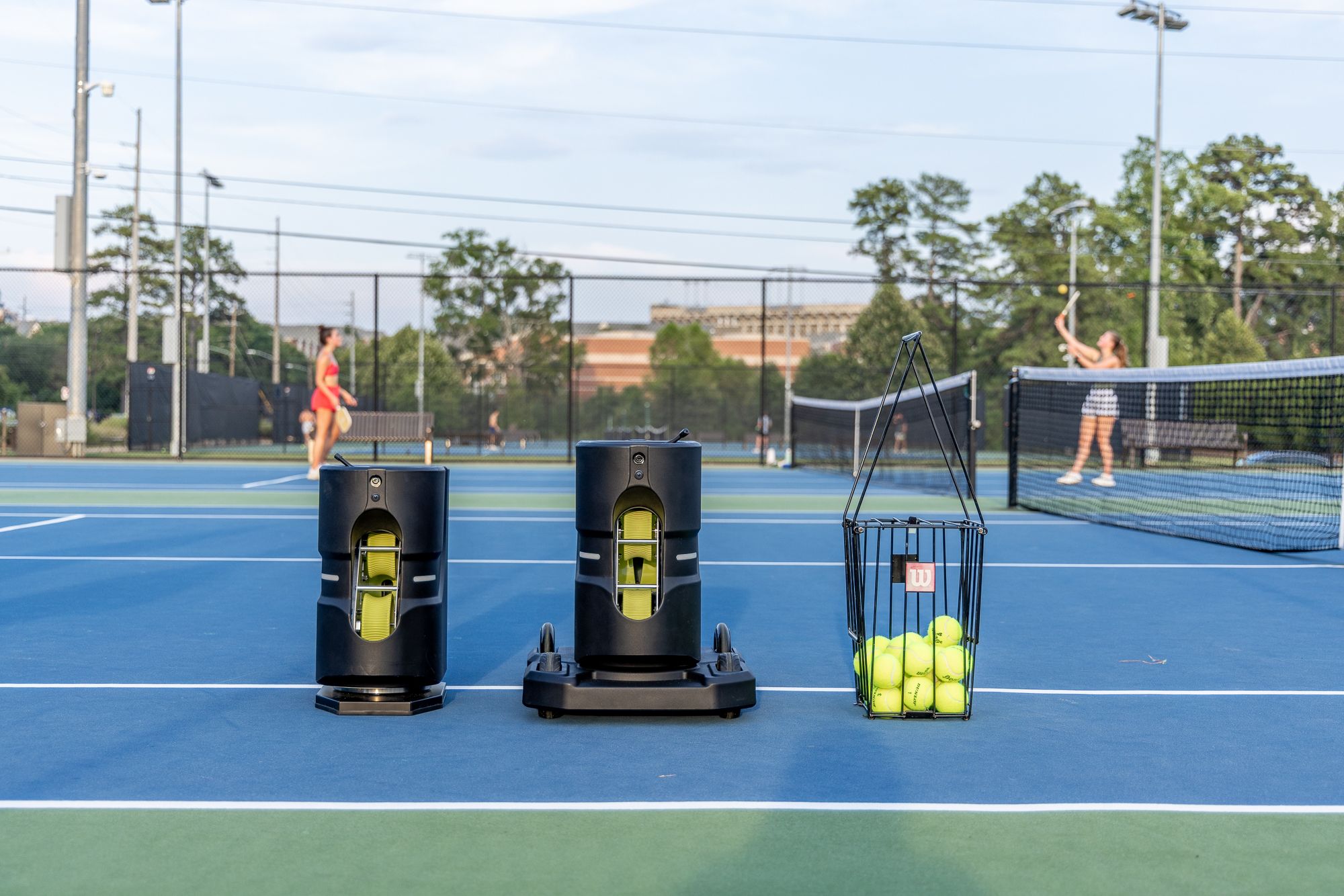
The Short Answer
A real ball machine costs $550 to $2,500 in 2026. Budget app-controlled machines sold on Amazon start around $550, classic stationary machines from Lobster and Sports Tutor run $1,300 to $2,000, and app-controlled smart machines run $1,525 to $2,500. Club machines cost $2,599 to $7,795. Below $300 you're buying a toy launcher, not a training machine.
The sticker isn't the whole bill. Remotes, batteries, oscillation, and a way to pick up balls add $100 to $600 to most purchases, and the cheapest machine on a spec sheet is often not the cheapest one to own.
Full disclosure: we make ball machines. Tennibot builds the Partner V2 and Partner Lite, which appear in the tables below. Every competitor price here comes from the manufacturer's own product page (or Amazon, for Amazon-only brands), checked on September 27, 2026. Where a price couldn't be verified, we say so. Prices change often in this category; several moved between July and September this year alone, so check the product page before you buy.
Ball Machine Price Tiers in 2026
| Tier | Price | What you get | Examples |
|---|---|---|---|
| Toy launchers | $100–$300 | Soft, slow feeds; kids and backyards | Furlihong, SCIFANTA |
| Budget app machines | $550–$1,300 | Full-size feeds, basic app, thin support | Tenniix Basic, Pongbot Pace S, PUSUN, ADIBO, Slinger Bag |
| Classic stationary | $1,300–$2,000 | Proven hardware, remote or knobs, few or no drills | Lobster Elite, Sports Tutor |
| Smart / app-controlled | $1,525–$2,500 | Custom drills, app control, better batteries | Partner Lite, Hydrogen, ERNE, Spinshot, Titan, Partner V2, Spinfire |
| Club machines | $2,599–$7,795 | Big hoppers, AC power, built for all-day teaching | Lobster Grand Five LE, Lobster Phenom, Playmate iGenie |
Prices verified against manufacturer pages and Amazon listings on September 27, 2026.
Toy launchers ($100–$300)
Amazon is full of plastic launchers in this range, sold for both tennis and pickleball. They lob balls gently and are fine for a 7-year-old in the driveway. They don't reach real rally pace, can't handle a full hopper of pressurized balls, and aren't built for daily use. Skip this tier if you're buying for an adult player.
Budget app machines ($550–$1,300)
This is the fastest-growing part of the market. Machines like the PUSUN PT-Mini Pro ($549), the Tenniix Basic ($899.99), ADIBO T500 ($949), Pongbot Pace S ($999.99 on sale; the Pace S Pro is $1,219.99), and PUSUN PT-Smart Pro ($1,258) feed full-size balls at real pace and come with a basic phone app. The trade-off is usually everything behind the machine: warranty terms are often short or hard to find, and parts and service often run through Amazon sellers. The Slinger Bag ($749) belongs here too, though its tennis launcher is listed sold out as of September 2026 and the pickleball model is no longer sold on Slinger's own site.
Classic stationary machines ($1,300–$2,000)
The machines you see at public courts. The Lobster Elite Two ($1,699, now with the remote included) and Sports Tutor's Tennis Tutor Plus ($1,779) are proven, simple, and durable. They feed from one fixed spot, use a remote or knobs rather than an app, and some don't run programmed drills. Lobster's drill-capable Grand series starts at $2,199.
Smart, app-controlled machines ($1,525–$2,500)
This is where most serious players land in 2026. Every machine here builds custom drills in an app, and the differences come down to battery, capacity, weight, and whether the machine can see you. The range runs from the Tennibot Partner Lite ($1,525) through the Hydrogen Proton ($1,695), Spinshot Player ($2,179), Tennibot Partner V2 ($2,275), and Titan ONE ($2,299 before power), up to the Spinfire Pro 2 ($2,499).
Club machines ($2,599–$7,795)
Built for clubs running machines all day: 200+ ball hoppers, AC power, and heavy frames. The Lobster Phenom ($3,899, 250 balls, 99 lbs) and the Playmate iGenie ($7,795, dealer-sold) are the standards. Most individual players don't need anything in this tier.
Ball Machine Prices by Sport
Tennis ball machine prices
| Machine | Price (Sep 2026) | Included | Extra cost | Warranty |
|---|---|---|---|---|
| Slinger Bag | $749 (sold out) | Remote | Oscillator $135 | 1 yr |
| Tennibot Partner Lite | $1,525 | App, Apple Watch, battery | None required | 3 yrs |
| Hydrogen Proton | $1,695 | App, battery | Remote $35, spare battery $75 | 1 yr |
| Lobster Elite Two | $1,699 | 10-function remote | External-battery version +$100 | 2 yrs |
| Sports Tutor Tennis Tutor Plus | $1,779 | Knob controls | Remote $200–$300 | 3 yrs |
| Spinshot Player | $2,179 | App, battery | Remote watch $100 | 2 yrs |
| Tennibot Partner V2 | $2,275 | App, Apple Watch, battery | None required | 3 yrs |
| Spinfire Pro 2 | $2,499 | Remote, app, lithium battery | Fast charger $129 | 2 yrs |
| Lobster Phenom | $3,899 | 20-function remote | Second remote +$200 | 2 yrs |
| Playmate iGenie | $7,795 | Controller | iSMASH upgrade $650 | 3 yrs |
Manufacturer list prices, September 27, 2026. For specs, pros, and cons of each machine, see the best tennis ball machines in 2026.
Pickleball machine prices
| Machine | Price (Sep 2026) | Included | Extra cost | Warranty |
|---|---|---|---|---|
| Sports Tutor Pickleball Tutor Plus | $1,319 | Knob controls | Oscillation $200, remote $200 | 3 yrs |
| Tennibot Partner Lite | $1,525 | App, Apple Watch, battery | None required | 3 yrs |
| Lobster Pickle Two | $1,599 | 10-function remote | External-battery version +$100 | 2 yrs |
| Hydrogen Electron | $1,695 | App, battery | Spare battery $75 | 1 yr |
| ERNE | $1,776 sale (reg. $1,999) | Remote, battery | Spare battery $229 | 2 yrs |
| Titan ACE | $2,199 + power | App | Battery ~$150, remote $129 | 2 yrs |
| Tennibot Partner V2 | $2,275 | App, Apple Watch, battery | None required | 3 yrs |
| Titan ONE | $2,299 + power | App | Battery ~$150, remote $129 | 2 yrs |
Titan sells its machines without a power source; the battery configuration adds $150 (ONE: $2,449 with battery). Manufacturer list prices, September 27, 2026. Full reviews: the best pickleball machines in 2026.
Padel ball machine prices
| Machine | Price (Sep 2026) | Control | Warranty |
|---|---|---|---|
| Padel Tutor Mini | from $869 | Knobs | 3 yrs |
| Lobster Padel | $1,429 (sold out) | Remote | 2 yrs |
| PadelShooter Smart | $1,445 | Remote + app | 2 yrs |
| Tennibot Partner Lite | $1,525 | App + Apple Watch | 3 yrs |
| Padel Tutor | $1,545 | Knobs (remote extra) | 3 yrs |
| Tennibot Partner V2 | $2,275 | App + Apple Watch | 3 yrs |
| PadelShooter MAX | $2,495–$2,560 | Remote + app | 2 yrs |
| Viborace | €4,900 | App on included phone | 1 yr |
Padel prices verified against manufacturer pages September 15, 2026. Full reviews: the best padel ball machines in 2026.
The Costs That Aren't on the Sticker
Two machines with the same list price can differ by $500 once you add what you need to actually use them. Check these five before you compare prices.
- Remote control: $0–$300. Lobster and Spinfire now include one. Titan charges $129, and Sports Tutor charges $200 for a two-button remote or $300 for multi-function. App-controlled machines like the Partner don't need one.
- Power: $0–$229. Titan's base prices include no battery at all (+$150). Spare batteries run $75 (Hydrogen) to $229 (ERNE). A spare matters more than it sounds: machines that need 8–12 hours to charge give you one session a day.
- Oscillation: $0–$200. Side-to-side feeding is standard on most machines, but it's a $200 option on the Pickleball Tutor and a $135 add-on for the Slinger Bag.
- Pickup: $38–$2,275. A basic hopper or pickup tube costs $38–$55. At the other end, an autonomous collector like the Tennibot Rover ($2,275) picks up for you.
- Warranty and returns. Coverage runs from 1 year (Hydrogen, Slinger) to 3 years (Sports Tutor, Tennibot), and extensions cost $99–$199. Return terms vary even more: ERNE charges a restocking fee of up to 25%.
What a Full Setup Costs in Year One
Here's what four common tennis setups actually cost once you add a way to pick up the balls.
| Setup | Machine | Pickup | Year-one total |
|---|---|---|---|
| Budget | PUSUN PT-Mini Pro $549 | Hopper $38 | ~$590 |
| Classic | Lobster Elite Two $1,699 | Hopper $43 | ~$1,740 |
| Smart | Partner Lite $1,525 | Hopper $38 | ~$1,565 |
| Hands-free | Partner V2 + Rover bundle $3,995 | Included | $3,995 |
Hopper prices from Tennis Warehouse, September 2026. The Partner Lite + Rover bundle is $3,245.
Is a Ball Machine Worth the Money?
Compare it with what you'd otherwise spend on reps. A private tennis lesson averages $113 in the US (Thumbtack's national range is $62–$204), and private pickleball coaching typically runs $50–$100 an hour. A $1,525 machine costs about the same as 13 tennis lessons.
The per-session math is what tips it. Two sessions a week for a year is about 100 sessions, so a $1,565 smart setup works out to roughly $16 per session in year one and gets cheaper every year after. A 3-year warranty puts that closer to $5 a session over the life of the coverage. A machine won't replace a coach's eye, but it gives you the hundreds of repetitions between lessons that make the lessons stick.
A ball machine is usually not worth it if you play once a month, if you'd have to haul it to a court you can't store it at, or if you only want casual hitting with friends. It is worth it if you practice alone at least weekly, you're a junior building strokes, or you coach and want a second pair of hands. For more on solo training, see how to practice tennis alone.
How to Pay Less for a Ball Machine
- Compare total cost, not list price. A $2,299 machine that needs a $150 battery and a $129 remote is a $2,578 machine.
- Look at bundles and refurbished units. Tennibot's machine + Rover bundles save $555, and Lobster sells refurbished Phenoms for $3,119.
- Don't pay for speed you won't use. Top speed is the most over-bought spec. Unless you're an advanced player, put the money into battery, capacity, and drills instead.
- Use financing if it helps. Tennibot offers monthly payments through Affirm or Klarna at checkout; ask other manufacturers what they offer.
Where Tennibot Fits
We build two machines, one price apart, with the same AI, cameras, drills, and app in both. The Partner Lite ($1,525) is a stationary 25 lb machine that costs less than the Hydrogen Proton, ERNE, Spinshot, Titan, or Spinfire. The Partner V2 ($2,275) adds autonomous movement: it moves along the baseline while feeding structured drills, so practice plays out like a rally instead of from one fixed spot. Both come ready to play with nothing extra to buy: app and Apple Watch control are included, the battery swaps out in under a second so a charged spare keeps you hitting, and both carry a 3-year warranty and a 60-day money-back trial. Both come in tennis, pickleball, and padel versions.
Pair either one with the Rover ball collector and nobody picks up a ball: bundles are $3,245 (Lite) and $3,995 (V2), $555 less than buying separately. Not sure which you need? Our guide to stationary vs mobile ball machines walks through the trade-off.
Frequently Asked Questions
How much does a tennis ball machine cost?
A good tennis ball machine costs $1,500 to $2,500 in 2026. Budget app machines on Amazon start around $550, classic machines like the Lobster Elite Two cost $1,699, app-controlled machines run $1,525 (Tennibot Partner Lite) to $2,499 (Spinfire Pro 2), and club machines cost $3,899 (Lobster Phenom) to $7,795 (Playmate iGenie).
How much does a pickleball machine cost?
Most full-size pickleball machines cost $1,300 to $2,300 in 2026: the Pickleball Tutor Plus is $1,319, the Tennibot Partner Lite $1,525, the Lobster Pickle Two $1,599, ERNE $1,776 on sale, and Titan ONE $2,299 before its battery. Budget Amazon machines start around $1,000, and toy launchers cost under $300.
How much does a padel ball machine cost?
Padel machines cost $869 (Padel Tutor Mini) to about $2,560 (PadelShooter MAX), with club machines like the Viborace at €4,900. The Tennibot Partner Lite ($1,525) and Partner V2 ($2,275) both come in padel versions.
Are cheap ball machines on Amazon worth it?
Machines under $300 are toys. Budget app machines at $550–$1,300, such as the Tenniix Basic ($899.99) and Pongbot Pace S ($999.99), can feed real balls at real pace, and they suit a player who wants to test whether machine training sticks. Before buying, check the warranty length, where repairs happen, and whether replacement batteries are available, since those are where budget machines usually fall short.
What extra costs come with a ball machine?
Plan on $100 to $600 on top of the sticker price: a remote ($0–$300), a spare battery ($75–$229), oscillation on some models ($135–$200), and a hopper or pickup tube ($38–$55).
Is a ball machine cheaper than lessons?
Over a year of regular use, yes. A private tennis lesson averages $113 in the US, so a $1,525 machine costs about the same as 13 lessons. At two sessions a week, a smart machine setup works out to about $16 per session in year one. Most players use a machine alongside lessons rather than instead of them.
Can you finance a ball machine?
Yes. Tennibot offers monthly payments through Affirm or Klarna at checkout, and some other manufacturers offer their own financing.
Sources
- Manufacturer product pages, checked September 27, 2026: tennibot.com, lobstersports.com, spinfiresport.com, hydrogensports.com, sportstutor.com, sportstutorcompany.com, spinshotsports.com, playmatetennis.com, titanballmachines.com, ernepickleballmachine.com, slingerbag.com
- Padel manufacturer pages, checked September 15, 2026: padelshooter.com, viborace.com, lobstersports.com, sportstutorcompany.com
- Amazon listings, September 27, 2026: Tenniix, PUSUN, ADIBO, VEVOR, Furlihong, SCIFANTA; store.pongbotsports.com (Pace S, Pace S Pro)
- Thumbtack, "How much do tennis lessons cost?" (national average $113, updated August 2025); Teachme.to, pickleball lesson pricing
- Tennis Warehouse (hopper and pickup tube prices)
Last updated September 27, 2026. We re-verify prices quarterly and note substantive changes here.