
What Happens After You Buy a Ball Machine?
You'll own a ball machine for years, not just for the day it arrives. Here's how warranties, trial periods, return policies, software updates, and support compare across the major brands, and the questions worth asking before you spend $1,500 or more.
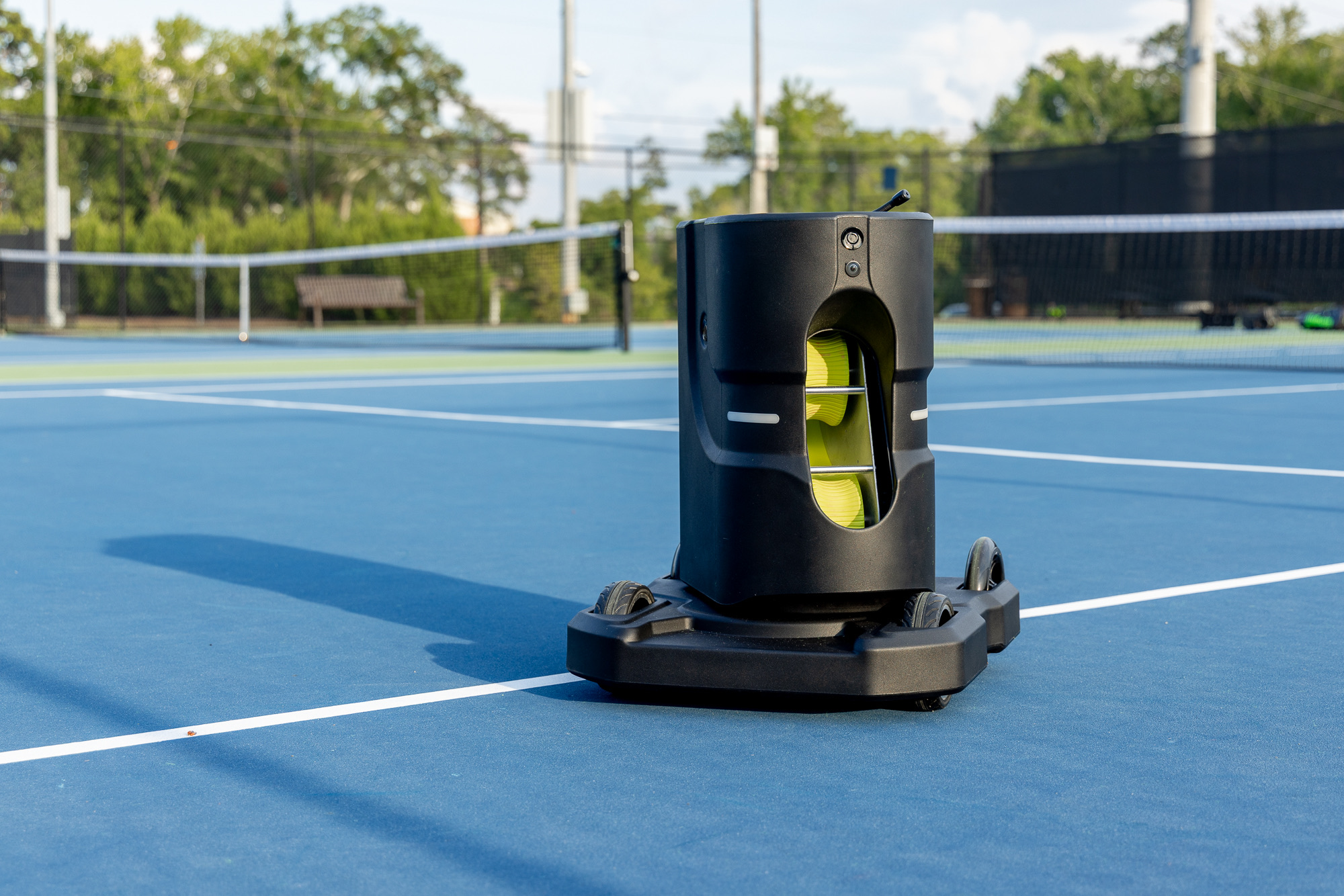
The Short Answer
After you buy a ball machine, five things decide whether it was worth the money: the warranty, the return or trial window, whether the machine gets software updates, how it travels to the court, and whether you can reach a person when something goes wrong. Across the 17 brands we checked, most offer a 1–2 year warranty and a 30-day return that requires the machine to be unused or like-new, often with a 10–25% restocking fee. Only three publish any software release notes: Spinfire, Spinshot (last entry in 2023), and Acemate (a single post).
Tennibot pairs a 3-year warranty with a 60-day risk-free trial, and no other ball machine brand offers that combination. The longest money-back window from any other brand we checked is 30 days.
Full disclosure: we make ball machines. Tennibot builds the Partner V2, Partner Lite, and Rover. Every competitor policy in this post comes from the manufacturer's own warranty, returns, or FAQ page, checked on November 15, 2026, and listed in the sources at the bottom. Where a brand doesn't publish a term, we say so instead of guessing. Policies change, so confirm on the brand's site before you buy.
A Ball Machine Is an Investment
A serious ball machine costs $1,500 to $2,500, so what happens after you buy it (the warranty, the return window, software updates, and support) matters as much as the spec sheet.
A serious ball machine costs $1,500 to $2,500, the price of 13 to 22 private tennis lessons at the US average of $113. (Our ball machine cost guide breaks down every price tier.) Most buyers compare machines on the spec sheet: top speed, spin, hopper size, battery life. Those matter, but they describe the machine on the day it arrives.
What decides whether the money was well spent is everything after that day. How does it get from your garage to the court? What happens if a motor fails in month 14? Can you send it back if it doesn't fit how you train? Is the app you're using in year two the same one you got in year one? Buyers rarely ask these questions before they buy, and they're the ones owners complain about most afterward.
Where Owners Get Let Down
Most ball machine letdowns come from five policy terms: returns limited to unused machines, restocking fees of 10–25%, return windows as short as 5 days, battery coverage as short as 3 months, and registration deadlines that can void the warranty.
The same patterns come up again and again in owner forums and reviews. We read the official warranty and return pages of 17 ball machine brands to see where those letdowns come from. Five terms stood out.
- Returns that only work if you never play. Acemate, Pongbot, Slinger, Spinshot, Titan, Tenniix, and Viborace accept returns only on unused or new-condition machines. Hydrogen accepts a return if the machine has fired fewer than 500 shots. You can't know whether a machine fits how you train without using it.
- Restocking fees. ERNE charges up to 25%, Lumistar 15–20% plus a $75 return-label deduction, and AceiiLab 15% plus a $50 packaging fee. Lobster, Spinshot, and Titan charge 10%, and Slinger charges $100 per launcher. On a $2,000 machine, a 25% fee is $500 lost for trying it.
- Very short windows. Tenniix allows 5 days for a no-reason return, Sports Tutor 1 week, and PadelShooter 14 days. SIMON requires you to request a return authorization within 5 business days.
- Short warranties, shorter battery coverage. Acemate, Hydrogen, Tenniix, and Slinger (US) cover the machine for one year, as does Pongbot’s written warranty. Batteries, the part most likely to wear out, are often covered for just 3 months (Spinshot, Titan, ERNE) or 6 months (Lobster, Pongbot). Slinger excludes battery life entirely. (Tennibot’s 3-year warranty includes the battery.)
- Paperwork traps. ERNE's warranty is void if you don't register within 60 days, and Lobster asks you to activate yours by emailing in the warranty card.
Ball Machine Warranties, Trials and Updates by Brand
Of the 17 brands we checked, Tennibot is the only one that pairs a 3-year warranty with a 60-day risk-free trial. Every other brand’s return window is 30 days or less, and most require the machine to be unused or like-new.
| Brand | Warranty | Return / trial | Restocking fee | Firmware updates | Phone support |
|---|---|---|---|---|---|
| Tennibot | 3 yrs (battery included) | 60-day risk-free trial | None (full refund) | Over the air; app releases almost weekly | Yes, 24/7 (AI agent after hours) |
| Lobster | 2 yrs (battery 6 mo) | 30 days | 10% | Not published | Yes, M–F business hours |
| Sports Tutor | 3 yrs on most models | 1 week, factory-direct only | None stated | No app as standard ($300 phone remote on some models) | Yes |
| SIMON | 3 yrs (Simon 2), 5 yrs (Simon X); battery 1 yr | 30 days, request within 5 business days | Yes, amount not stated | No app | Yes |
| Spinfire | 2 yrs | 30 days, original condition | Not published | Via app (Bluetooth) or USB; release notes published | Yes, M–F (Australia) |
| Spinshot | 2 yrs (battery 3 mo) | 30 days, unused | 10% | Bluetooth or Wi-Fi; version history published (last entry 2023) | Yes |
| Titan | 2 yrs (battery 3 mo) | 30 days, unused | 10% | Via app over Bluetooth | Yes |
| ERNE | 2 yrs, register within 60 days (battery 3 mo) | 30 days | Up to 25% | App; update method not published | Yes |
| Lumistar | 2 yrs | 30 days, like-new | 15–20% + $75 label | Via app | Yes, 3 hrs on weekdays |
| Hydrogen | 1 yr | 30 days, under 500 shots | None stated | App; update method not published | Yes, M–F business hours |
| Acemate | 1 yr | 30 days, unused | None stated | Over the air; one release-notes post | No, email only |
| Pongbot | 1 yr (battery 6 mo) per its warranty document; site advertises up to 3 yrs on core components | 30 days, new condition | None stated | Remote firmware via app | No, email only |
| Tenniix | 1 yr (2 yrs EU) | 5 days, unused | Fees on opened units | Via app | Yes, M–F business hours |
| AceiiLab | Varies by region | 30 days, like-new | 15% + $50 packaging | Over the air via app | Yes |
| Slinger Bag | 1 yr US, 2 yrs EU (battery excluded) | 30 days, new and unused | $100 per launcher | Not published | Yes |
| Viborace | 1 yr (motor 1.5 yrs) | 30 days, unused | None stated | App on included phone | No, email only |
| PadelShooter | 2 yrs (DIY part swap) | 14 days, unused or briefly tested | May deduct loss in value | Automatic via app | No, WhatsApp and email |
From each manufacturer's own warranty, returns, and support pages, checked November 15, 2026. "Not published" means the brand's site doesn't state it. Paid warranty extensions (Lobster, Spinfire, Hydrogen, Tenniix, Titan, Acemate, AceiiLab) not shown.
Three brands match or beat our 3-year warranty on some models: Sports Tutor, SIMON, and Playmate (whose iGenie warranty covers parts only). None of them offers a return window longer than 30 days (Playmate sells through dealers and doesn’t publish one), and Sports Tutor's money-back window is one week. On the other side, no brand we checked offers more than 30 days to return a machine you've actually played with.
Day One: Unboxing, Setup and Getting It to the Court
Three things decide how the first week goes: whether someone walks you through setup, whether the box includes everything you need to play, and how easily the machine travels to the court.
The first week sets the tone. A machine that's hard to set up, or that arrives with a manual and nothing else, often ends up in the garage. Three things are worth checking before you buy.
- Does someone walk you through setup? Most brands hand you a manual and a support email. A live walkthrough, where someone helps you pair the app, run your first drill, and set up for your court, gets you hitting in the first session instead of the third.
- Is everything you need in the box? Some machines ship without a battery, a remote, or oscillation, and those add-ons can add hundreds of dollars before you hit a ball. Check what "ready to play" actually includes.
- How does it travel? Most owners don't have a private court, so the machine rides in a car every session. Weight, wheels, and how it sits in a trunk matter more than most spec sheets let on.
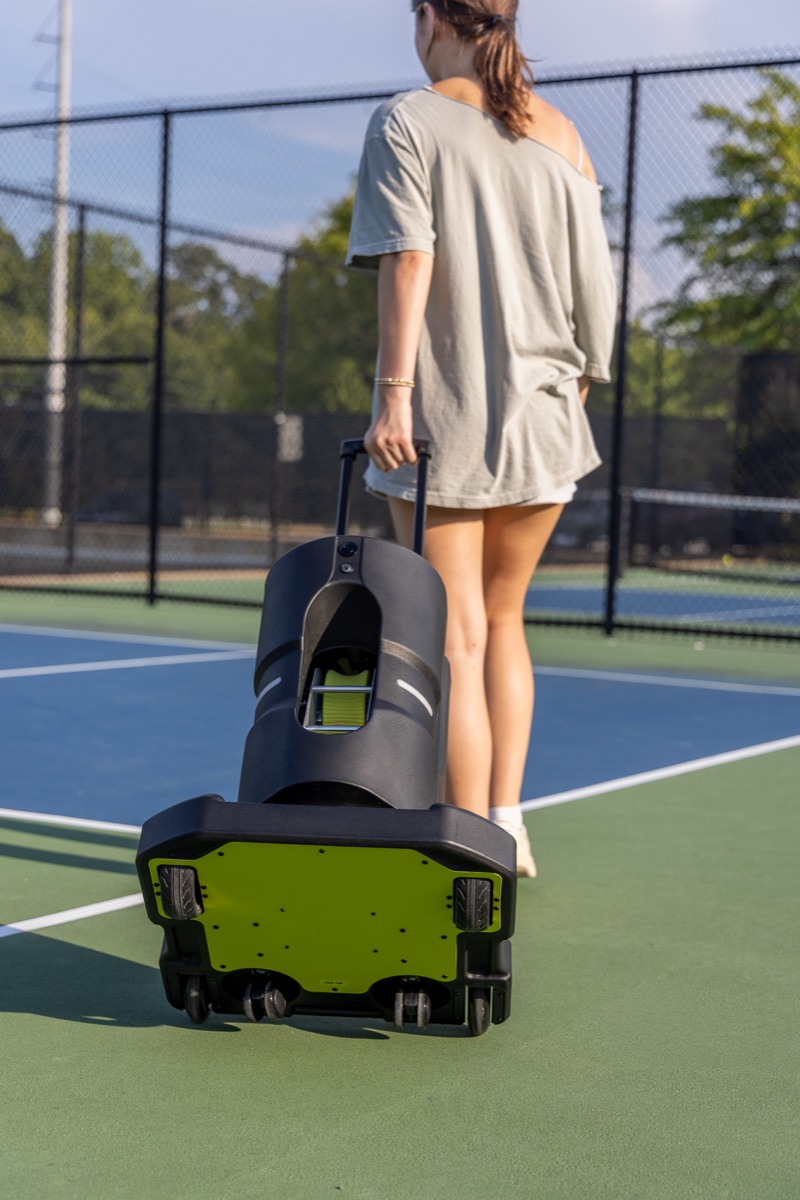
Small details like these rarely show up on a spec sheet, and they're why we ship every Partner V2 and Rover with a foam car mount. It's part of the packaging: keep it, set it in your trunk or back seat, and the machine sits on top of it so it rides to the court steady instead of sliding around. Nobody asks for it at checkout, but you use it every time you drive to the court. Every Tennibot also comes with a 1-on-1 onboarding call, where we set up the machine and app with you and run your first drills together.
“The machine worked flawlessly right out of the box and gave us a serious workout as a family. We’re still learning the app, but the Partner itself has been a game-changer. Thank you for shipping it so quickly and for providing such great support. It has been one of the smoothest product experiences we’ve ever had.”
Chris B., Partner owner
Day 365: Does the Machine Get Better?
App-controlled ball machines can gain features after you buy them through app and over-the-air firmware updates. Traditional machines with knobs or a remote stay exactly as they shipped.
This is the biggest difference between ball machines today, and buyers miss it most often. A traditional machine is finished the day it leaves the factory. Its knobs and remote buttons do the same thing in year three as they did on day one. That isn't necessarily bad, since simple machines are durable, but it means you're paying for exactly what's on the spec sheet and nothing more.
App-controlled machines can improve after you buy them, but only if the company keeps shipping software. Ask two things: does the machine get firmware updates over the air (no shipping it back, no USB stick), and how often does the app actually change? A brand that hasn't updated its app in a year isn't adding anything to the machine you already own.
Tennibot ships a new app release almost every week, and firmware updates install over the air from the app. The release history is public in the App Store and Google Play.
The biggest example so far is Rally, which arrived on October 30, 2026 as a free app and firmware update. Rally makes the Partner V2 play like an opponent with a style of its own. You set your level (NTRP or UTR for tennis, DUPR for pickleball), pick one of six opponents, such as Theo, The Baseliner, or Tessa, The Dinker, and the machine moves around the court and feeds shots from where that player would hit them. Owners who bought their Partner V2 a year earlier got Rally the same day new buyers did, at no cost. (Rally works on the Partner V2 in tennis and pickleball. It isn't available on the Partner Lite.) Meet the six Rally opponents.
Over the past year, owners also got these features without buying anything:
- A stationary mode, so the Partner can feed from a fixed spot as well as move
- Left-handed mode, which mirrors every preset drill for lefties
- Apple Watch control, so you can run drills from your wrist
- Drill previews that show where every ball will land before you start
- Full padel support, with padel court mapping
- A live ball counter and station-free setup
That's what "investment" means for a smart machine: the one you own in two years should be better than the one you unboxed.
When Something Goes Wrong: Warranty and Support
When a ball machine breaks, three things decide how fast you’re back on court: how long the warranty lasts and whether it covers the battery, whether you can reach a person by phone, and where the repair happens.
Ball machines are motors, belts, batteries, and electronics that get rattled in a car trunk and baked on a hard court. Something eventually needs attention, and when it does, three things matter.
- Warranty length and what it covers. One year is common. Read the exclusions: batteries are often covered for less time than the machine, and some warranties require registration within a set window.
- Who you can reach. Check whether the brand publishes a phone number and when it's answered. Several brands offer email only, and many phone lines are open weekday business hours.
- Where repairs happen. A brand that builds and services its machines domestically can turn a repair around faster than one shipping parts from overseas.
Tennibot machines are built in Auburn, Alabama, where we've designed and assembled them since 2016. Every machine carries a 3-year warranty covering manufacturing defects and hardware malfunctions, battery included, and you can call us at 251-277-8022. After hours, an AI phone agent takes your call and routes it to our team.
What If Your Machine Breaks in Month 14?
Fourteen months in, a machine with a 1-year warranty is out of coverage, a 2-year warranty usually still covers the machine but often not the battery, and Tennibot’s 3-year warranty still covers both the machine and its battery.
Policies are easiest to compare on a real scenario. Say the feed motor stops working 14 months after delivery. Here’s what each brand’s published terms mean for three common choices.
| Month 14 | Tennibot | Lobster | Acemate |
|---|---|---|---|
| Still under warranty? | Yes, 3 years | Yes, 2 years (if you activated it) | No, 1 year ended at month 12 |
| If it’s the battery | Yes, the battery is covered for the full 3 years | No, battery coverage ended at month 6 | No, the warranty ended at month 12 |
| How you reach them | Phone, 251-277-8022 | Phone, weekdays 7:30–4 PT | Email or contact form |
| Who fixes it | The team that built it, in Auburn, Alabama | Lobster’s service team | Repair at your cost, unless you bought the paid extension |
The battery is where policies split the most. Tennibot covers it for the full 3 years, while Lobster covers batteries for 6 months, Spinshot, Titan, and ERNE for 3, and Slinger excludes them. Whatever you buy, ask one more question the policies rarely answer: who pays shipping on a warranty repair? On a 35-pound machine, that can be the difference between a free fix and a $100 one.
7 Questions to Ask Before You Buy a Ball Machine
Whatever brand you're considering, get clear answers to these before you pay.
- How long is the warranty, and is the battery covered for the same period?
- Can I return it after using it, and for how many days? Some brands accept only unopened or unused returns.
- Is there a restocking fee, and who pays return shipping?
- Does the machine get firmware updates, and when was the app last updated?
- What's included, and what do I have to buy separately? Battery, remote, oscillation, and charger are the usual add-ons.
- Will someone help me set it up?
- Is there a phone number, and when is it answered?
What Comes With a Tennibot
We build three machines: the Partner V2 ($2,275), which moves around the court in any direction while it feeds drills; the stationary Partner Lite ($1,525); and the Rover, which collects the balls for you. The Partner V2 and Lite come in tennis, pickleball, and padel versions. Here's what comes with them:
- A 60-day risk-free trial. Play with it for up to 60 days after delivery. If it isn't right for you, return it for a full refund.
- A 3-year warranty on manufacturing defects and hardware malfunctions, battery included. No other ball machine brand pairs a 3-year warranty with a 60-day risk-free trial.
- New app releases almost every week and over-the-air firmware updates, included with the machine.
- Rally on the Partner V2: six opponents with their own playing styles for tennis and pickleball, free, with more added in app updates.
- A 1-on-1 onboarding call to get you set up and hitting.
- A foam car mount with every Partner V2 and Rover, so the machine travels safely.
- Everything you need in the box: battery, app control, and Apple Watch control, with no remote or oscillator to buy. The battery swaps out in under a second, so a charged spare keeps you hitting.
Frequently Asked Questions
How long is a typical ball machine warranty?
Most ball machines come with a 1 or 2 year warranty. Acemate, Hydrogen, Tenniix, and Slinger (US) cover 1 year, and so does Pongbot’s written warranty; Lobster, Spinfire, Spinshot, Titan, ERNE, Lumistar, and PadelShooter cover 2 years. Tennibot, Sports Tutor, and SIMON's Simon 2 offer 3 years, and the Simon X offers 5. Batteries are often covered for less, sometimes just 3 months; Tennibot’s 3-year warranty includes the battery.
Can you return a ball machine after using it?
Usually not. Most brands accept returns within 30 days only if the machine is unused, new, or like-new, and many charge a 10–25% restocking fee. Tennibot offers a 60-day risk-free trial: you can play with the machine and return it within 60 days of delivery for a full refund.
Which ball machine has the best warranty and return policy?
Tennibot is the only ball machine brand that pairs a 3-year warranty with a 60-day risk-free trial. Sports Tutor and SIMON also offer 3 years or more on some models, but their return windows are one week and 30 days.
Do ball machines get software updates?
Traditional machines with knobs or a remote don't. App-controlled machines can, but most brands don't publish how often they update or what changes; Spinfire and Spinshot are the exceptions with public release notes. Tennibot ships a new app release almost every week, and its firmware updates install over the air from the app, so the machine gains features after you buy it. The largest so far is Rally, a free update that lets the Partner V2 play like an opponent with a specific style.
Can a ball machine play like a real opponent?
Some app-controlled machines now offer opponent-style modes. On the Tennibot Partner V2, Rally lets you set your level, pick one of six named opponents (three for tennis, three for pickleball), and the machine moves around the court to feed shots the way that player would. It arrived as a free update for every Partner V2 owner and isn't available on the Partner Lite.
How do you transport a ball machine in a car?
Check the weight and whether it has wheels and a handle, and secure it so it can't slide or tip in the trunk. Tennibot ships every Partner V2 and Rover with a foam car mount that's part of the packaging: set it in the trunk and the machine sits on top of it.
Is a ball machine worth the money?
For anyone who practices alone at least weekly, usually yes: a $1,500 to $2,500 machine costs about as much as 13 to 22 private tennis lessons and delivers hundreds of reps a session for years. The warranty, trial, and update policy decide how long that value lasts, so weigh them alongside price and specs.
Sources
Every page below was checked on November 15, 2026.
- Lobster: warranty · returns · support
- Sports Tutor: returns · contact · phone remote
- SIMON: warranty · returns · contact
- Spinfire: warranty · returns · software · software
- Spinshot: warranty · returns · version history
- Titan: warranty · returns · software
- ERNE: warranty · returns · FAQ
- Lumistar: returns · firmware · contact
- Hydrogen: warranty · returns · contact
- Acemate: warranty · returns · firmware
- Pongbot: warranty · warranty · returns
- Tenniix: warranty · returns · contact
- AceiiLab: FAQ · returns · updates
- Slinger Bag: warranty · returns · support
- Viborace: product page and warranty · returns · contact
- PadelShooter: warranty · returns
- Playmate: iGenie warranty
- Thumbtack, “How much do tennis lessons cost?” (national average $113)
Last updated November 15, 2026. We re-check competitor policies quarterly and note substantive changes here.